Historical place narrative
Farina: Being Made Again
Documented history, present restoration sites, and a careful what-if, explored together on a map.
Heritage trails & historical walks
Interactive heritage trails that connect streets, buildings and landscapes with the stories behind them. Built for councils, historical societies and visitor organisations, and designed to be explored on a phone. Brochures, photographs and research you already hold can become easier to discover and use while people are exploring town.
Already have a heritage walk? Send me your brochure, route or rough list of stops. I'll help you work out what a small digital trail could look like for your town.
A walking brochure. A collection of old photographs. Plaques around town. Research held by a historical society. A digital trail can bring those pieces together and connect them to the places visitors are standing.
It can support an existing heritage walk or become the starting point for a new one, with a web link people can open before they arrive or while they explore.
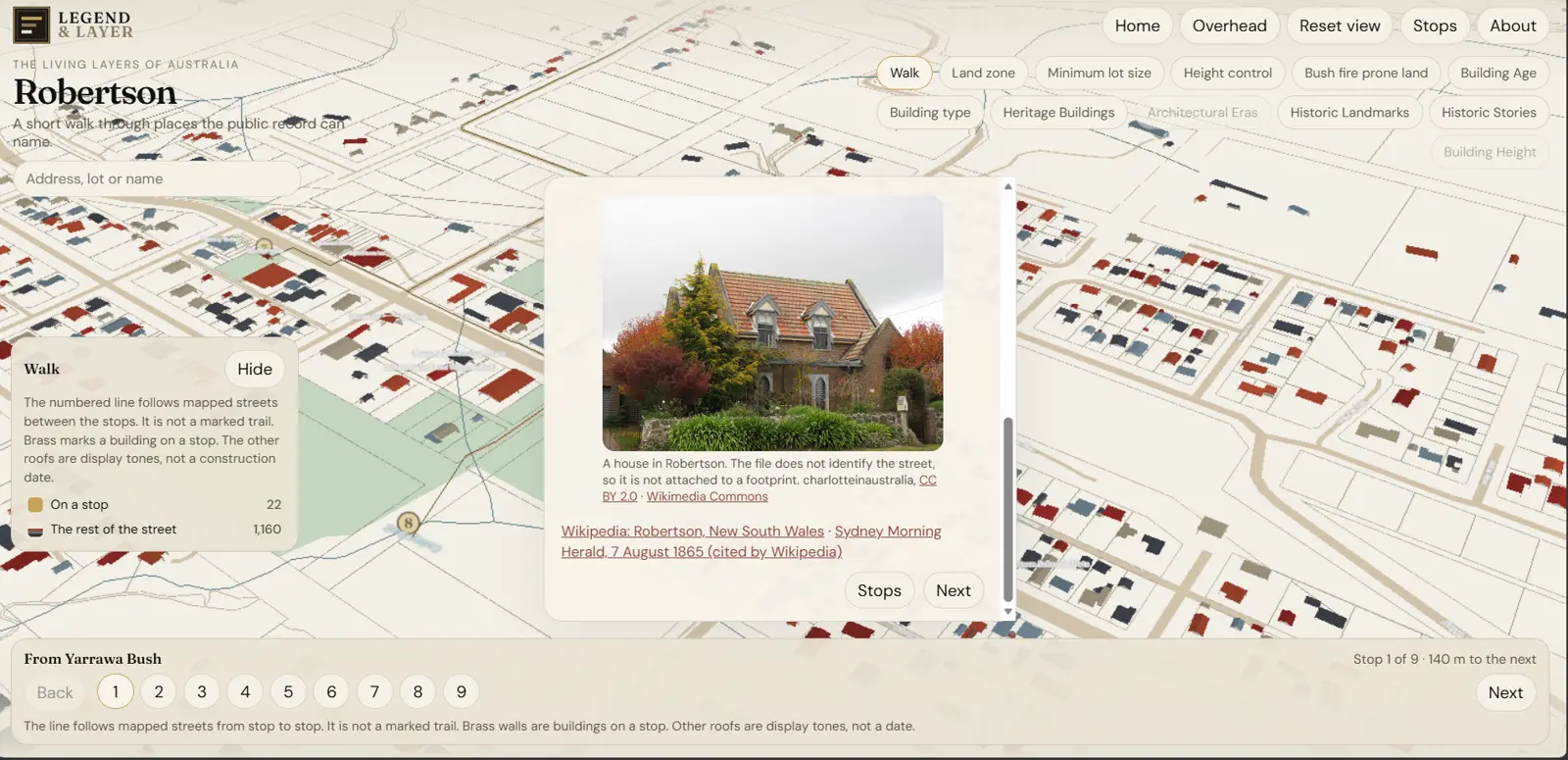
Examples of the interface. A map, a selected stop, and a story.
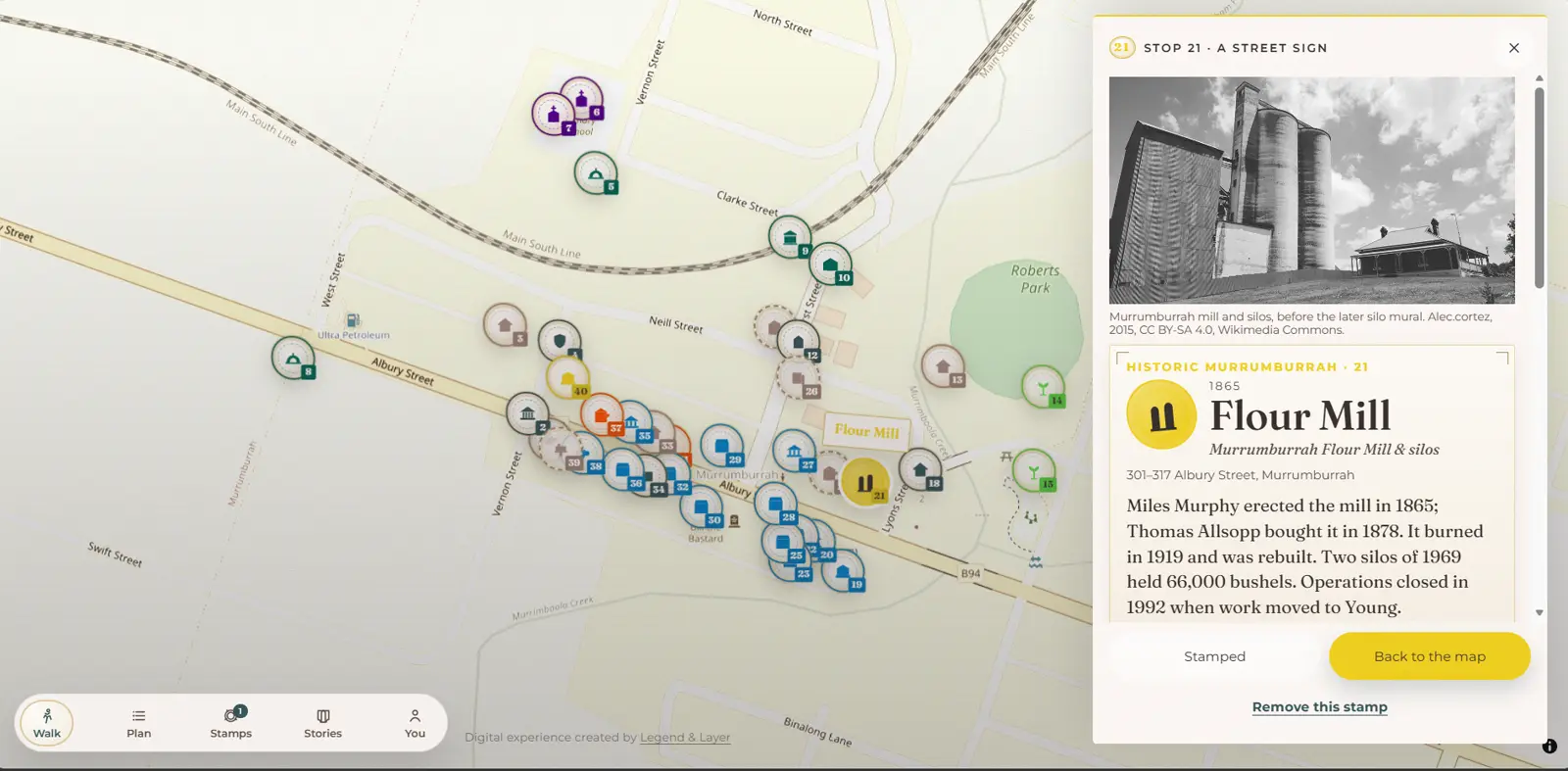
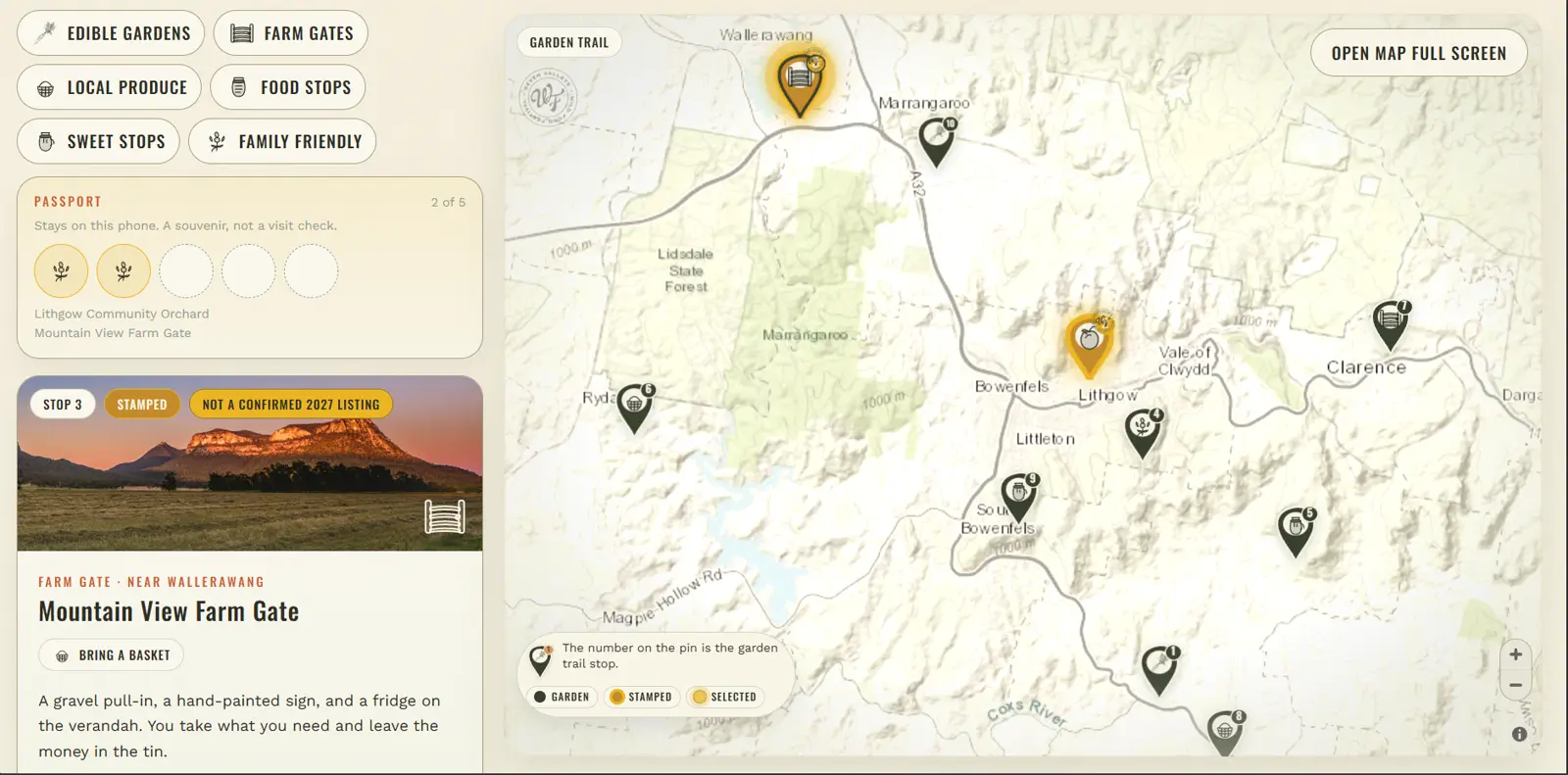
Visitors can follow the whole trail or explore the places that interest them. The experience is designed around the town, its stories and the people using it.
These are possible project options, not standard inclusions.
The final scope depends on the material available, the route and what visitors need to do.
Historical place narrative
Documented history, present restoration sites, and a careful what-if, explored together on a map.
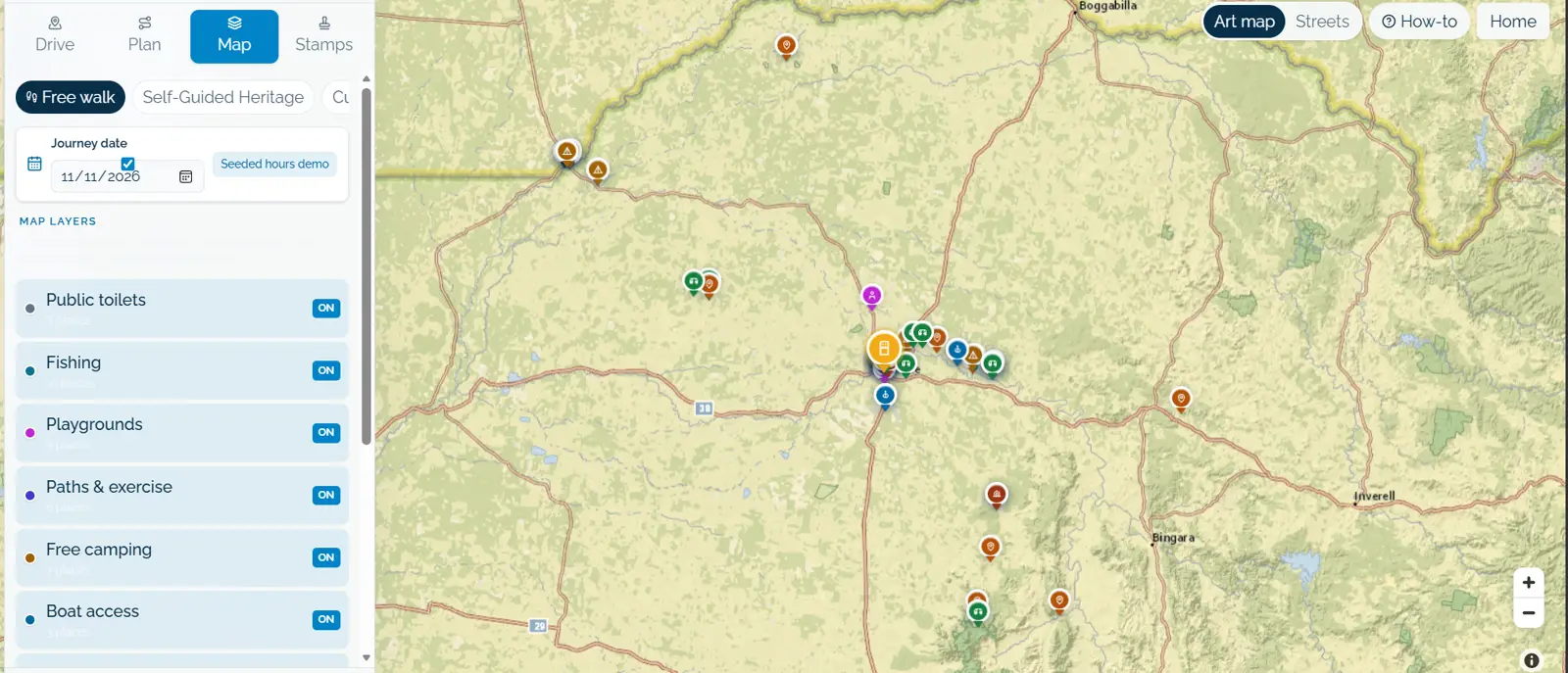
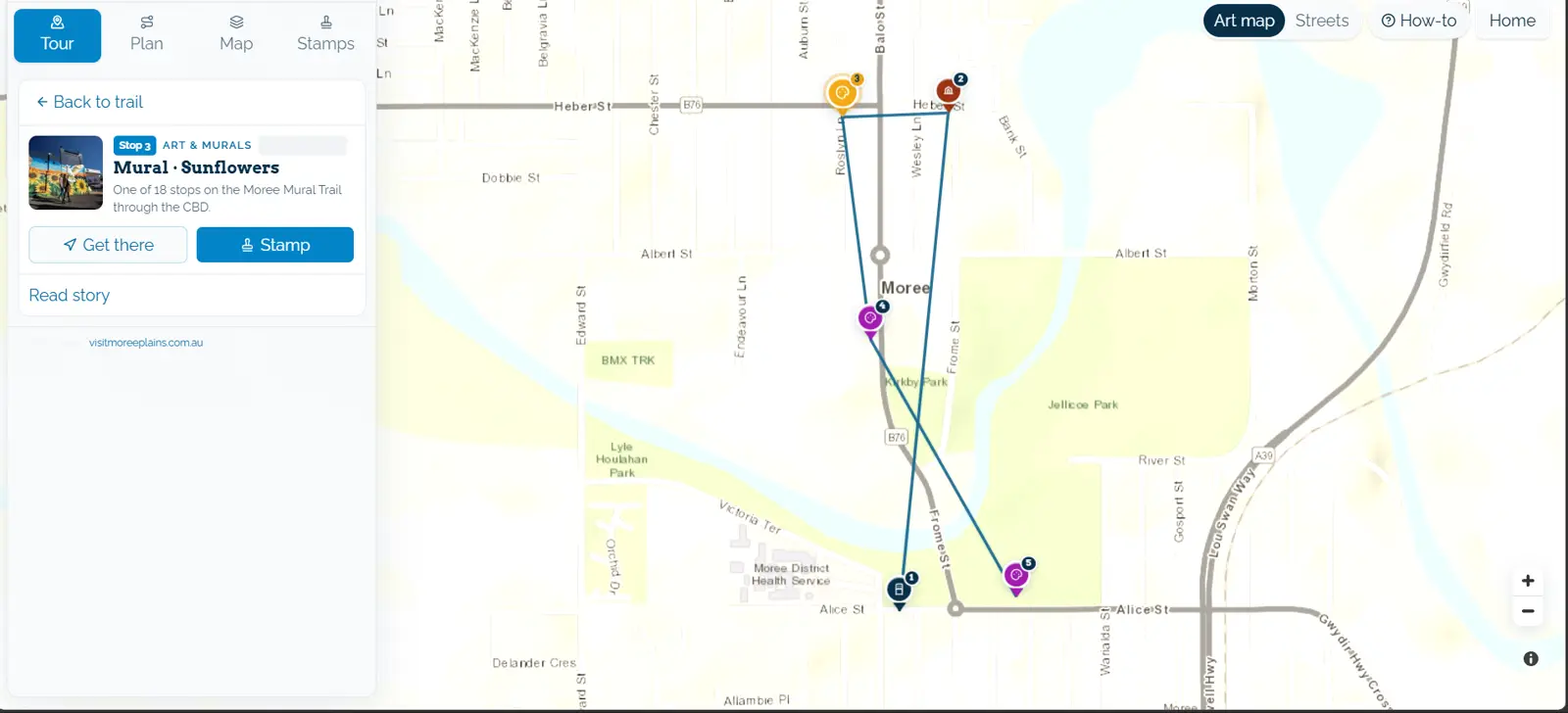
A Moree Plains visual. A shire map with layers, and a selected stop with a photograph.
Agree who the trail is for, where it takes them and what they should discover.
Bring together the stops, research, photographs and practical information. Identify gaps and check permissions.
Create the map and story experience, with local contributors reviewing the content.
Check the trail on phones and along the route, then prepare the website link and QR entry points.
You work directly with Eric throughout the project.
Historical accuracy, image permissions and cultural permissions are part of scoping and review. An archive or a photograph being available does not, by itself, give permission to publish it, including culturally sensitive material.
A project might begin with a focused walk through one town, or connect several places across a shire. The scope depends on the number of stops, the material available and the features visitors need.
After an initial conversation, you receive a clear proposal covering the build, content responsibilities, hosting and ongoing support.
Yes. An existing brochure, route or collection of signs can provide the starting point. The digital experience can add context and make the material easier to explore.
The proposed experience runs in a web browser and can be opened through a link or QR code.
A rough list of stops, the stories you want to tell and any photographs or research you already hold are useful starting points. Content preparation and permissions are agreed during scoping.
Reception should be considered when planning the trail. Any offline or low-connectivity features need to be scoped and tested for the particular experience.
Yes. Agree how content changes, hosting and support will be handled as part of the project scope.
Tell me which town the trail is for and what you already have. A link to a brochure, a proposed route or a rough list of stops is enough to start. If you'd rather send a PDF, email me at hello@legendandlayer.com.